For many teens and young adults, wisdom teeth can feel like a non-issue, especially when there are no swollen or bleeding gums. If nothing hurts, it is easy to assume everything is fine and move on, and parents often take the same approach, waiting for discomfort before scheduling an evaluation.
It’s a classic case of “if it isn’t broken, don’t fix it,” but when it comes to your teeth and oral health, that mindset can allow problems to develop quietly over time.
The challenge is that wisdom teeth can cause issues long before pain ever appears, and in some cases, pain is actually a late-stage warning sign. By the time discomfort shows up, damage may already be underway.
Understanding how wisdom teeth develop and why wisdom teeth without pain can still be a concern helps explain why early evaluation matters, even when everything feels normal.
Wisdom Teeth Can Be Problematic without Causing Pain
Wisdom teeth are the last molars to develop, typically emerging between the late teens and early twenties. Because they erupt later than other teeth, they often compete for limited space in the jaw.
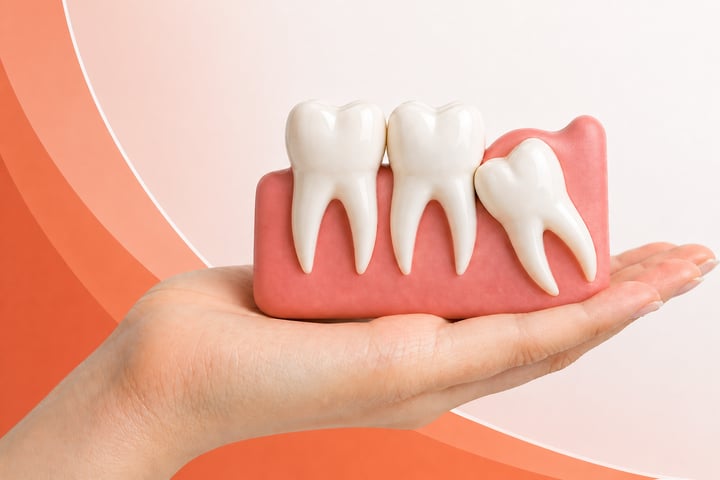
When wisdom teeth do not have enough room to emerge properly, they may:
- Remain partially erupted.
- Stay trapped beneath the gum or bone (impacted).
- Erupt at an angle toward nearby teeth.
None of these conditions automatically causes pain at first. Many patients with impacted or poorly positioned wisdom teeth feel perfectly fine until complications begin to surface.
Common Wisdom Teeth Problems That Often Go Unnoticed
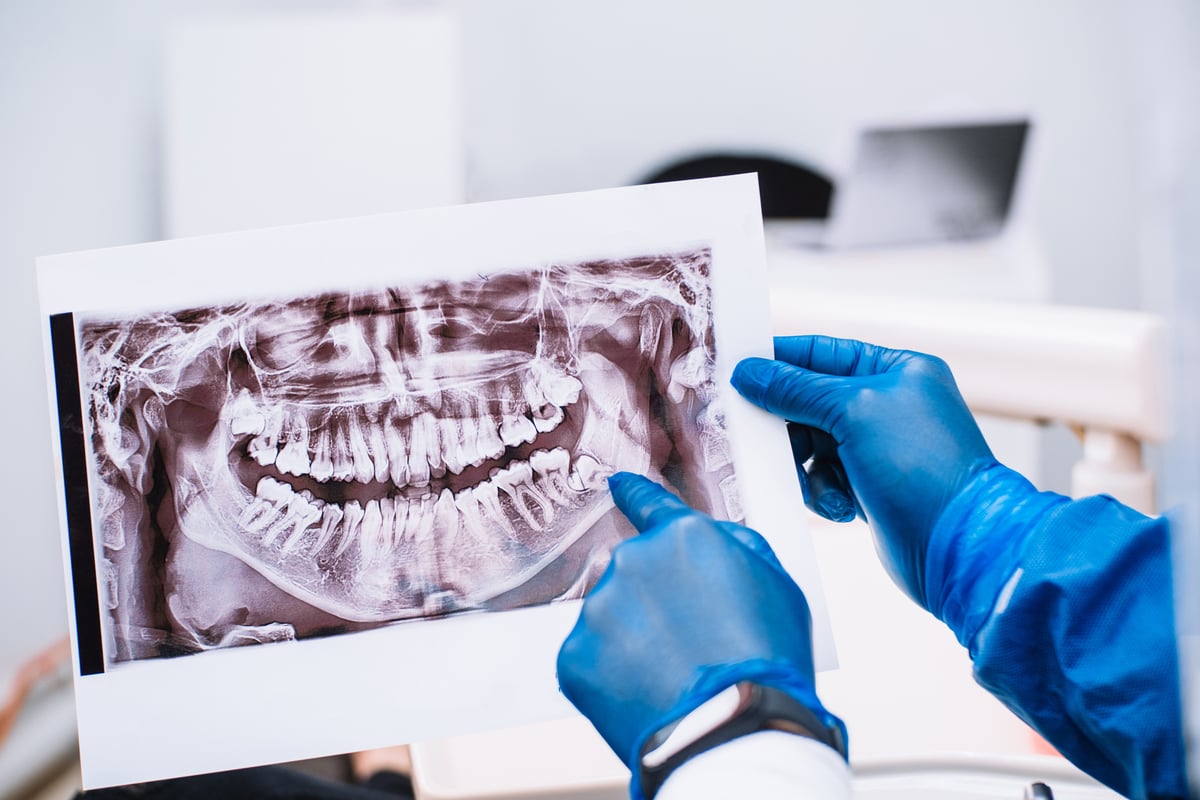
Even when wisdom teeth do not hurt, they can still contribute to several hidden issues that usually show up first on X-rays or exams.
- Crowding and Pressure: As wisdom teeth push against existing teeth, they can place pressure on the back of the dental arch, which may affect alignment over time, especially for patients who have had orthodontic treatment.
- Infection Beneath the Gumline: Partially erupted wisdom teeth can create pockets where bacteria collect, which are difficult to keep clean and may become infected without obvious early symptoms.
- Damage to Neighboring Teeth: Wisdom teeth that press against second molars can increase the risk of decay, gum disease, or bone loss around otherwise healthy teeth.
- Cysts or Other Growths: In rare cases, fluid-filled sacs can develop around impacted wisdom teeth, growing slowly and painlessly while damaging surrounding bone and teeth if left untreated.
While historically, it was thought that wisdom teeth may affect alignment over time, especially for patients who have had orthodontic treatment, multiple studies have found no clear causal relationship between wisdom teeth and anterior crowding.
Because the above problems develop gradually, patients may not notice anything is wrong until treatment becomes more complex.
Why Pain is Often a Late Warning Sign
Pain from wisdom teeth usually appears only after inflammation, infection, or structural damage has progressed. At that point, patients may experience swelling, jaw stiffness, bad breath, or a sudden toothache.
By contrast, early-stage issues are often visible only on X-rays and during clinical exams, which is why dental professionals do not rely on pain alone when evaluating wisdom teeth. An evaluation allows specialists to assess:
- Tooth position and angulation
- Available space in the jaw
- Proximity to nerves and neighboring teeth
- Signs of infection or bone changes
This information helps determine whether wisdom teeth can be safely monitored or whether intervention may be recommended.
Why Age and Timing Matter
Wisdom teeth are easier to evaluate and manage earlier in life, even when there is no pain. Younger patients generally heal more quickly and experience fewer complications if treatment is needed.
Younger patients (typically late teens to early 20s) have incomplete root formation, making extraction easier, less dense bone, and a lower risk of dry socket, nerve injury, and prolonged recovery.
That does not mean every young patient needs their wisdom teeth removed. It does mean that waiting for wisdom teeth pain is not an ideal strategy, because it can limit options and increase the likelihood of urgent treatment.
Early evaluation provides clarity and choices rather than forcing decisions during an uncomfortable situation.
Monitoring vs. Treatment: A Personalized Approach
Modern wisdom teeth care is not one-size-fits-all. Some patients may keep their wisdom teeth for life without issues, while others may benefit from timely removal based on their specific risk factors.
A professional evaluation helps answer key questions:
- Are the wisdom teeth likely to erupt normally?
- Are they creating conditions that increase future risk?
- Is monitoring appropriate, or is intervention advisable?
This personalized approach allows patients and families to make informed decisions based on evidence, not assumptions.
The Role of Early Evaluation
For teens, parents, and young adults, the biggest takeaway is simple: wisdom teeth without pain can still cause problems.
Scheduling an early evaluation does not commit anyone to treatment; it provides insight, reassurance when appropriate, and guidance when action is needed. In many cases, identifying concerns early helps prevent more serious complications later on.
At Northwest Oral & Maxillofacial Surgery, wisdom teeth evaluations focus on long-term oral health, careful monitoring, and clear communication. Whether the next step is observation or treatment, our goal is to help patients make confident and informed decisions before pain becomes the deciding factor.
Contact Northwest Oral & Maxillofacial Surgery today to schedule a wisdom teeth evaluation.