
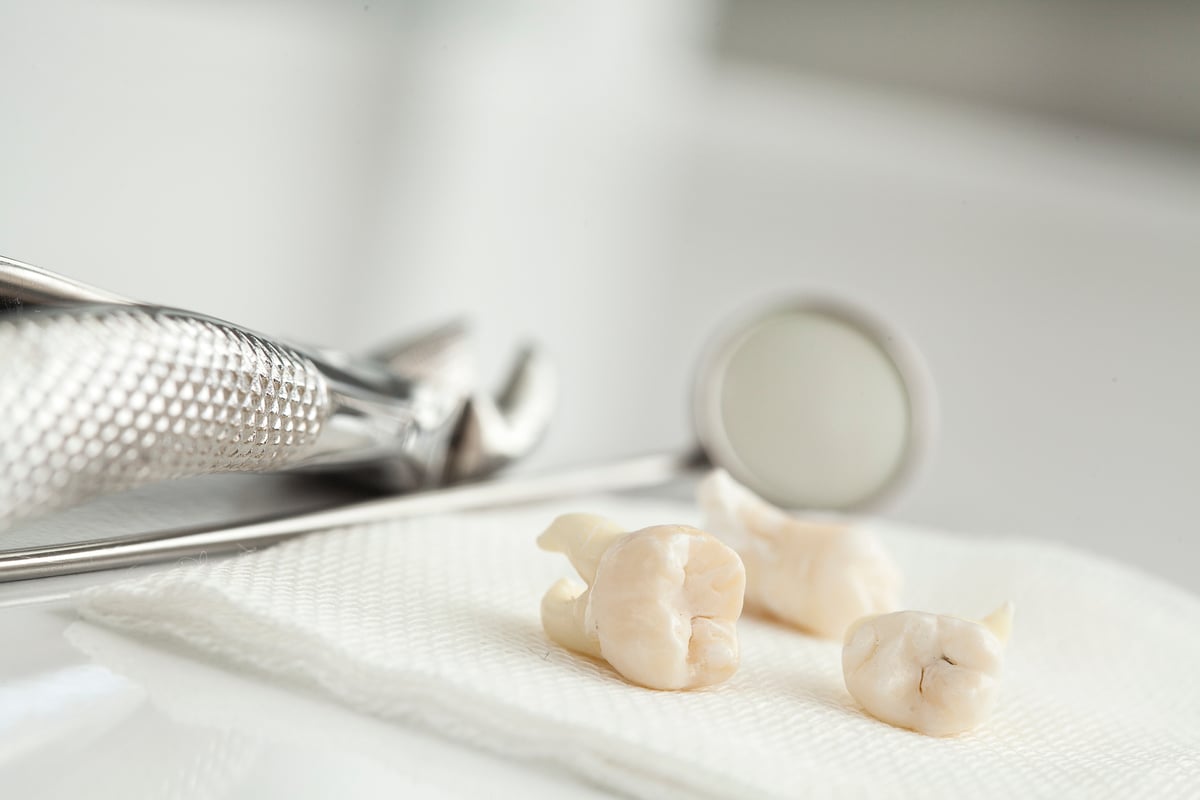
You may hear from friends, family, and the internet that the “best age” to remove wisdom teeth is between 16 and 18, “as early as possible”, or even “never!” The truth is, there is no one-size-fits-all age, as every patient and every case is unique.
Wisdom teeth, or third molars, are the last teeth to develop and usually emerge sometime between ages 17 and 25. Most people have four wisdom teeth, though some have fewer or none.
Because these molars erupt so late, there often is not enough room for them to come in. When a tooth cannot fully break through the gums or grows at an angle, it becomes impacted and can cause pain, infection, cysts, or damage to the neighboring molar.
Many patients have their wisdom teeth removed in their late teens or early 20s, but there is no universal “right” age. Wisdom teeth form at different rates, and jaw size, bone density, and tooth position vary from person to person.
Some people never need their wisdom teeth removed if they are fully erupted, functional, painless, and disease-free.
For patients with impacted or high-risk wisdom teeth, however, there are strong clinical reasons to consider earlier removal: before the roots are fully formed and while the surrounding bone is softer, surgery is usually less complex, and recovery is often smoother.
Why Wisdom Teeth Can Cause Problems
Because wisdom teeth are the final teeth to erupt, they often encounter obstacles such as limited jaw space, which can force them into angled or abnormal positions. These impactions can cause pain, inflammation, and long-term damage if not addressed.
An educational presentation published by the American Association of Oral and Maxillofacial Surgeons (AAOMS) outlines the wide range of problems associated with impacted third molars, including:
- Infection
- Damage to the neighboring teeth and tissues
- Tooth decay
- Periodontal disease
- Receding gums
- Loosened teeth
- Bone loss
- Tooth loss
- Jaw weakening
- Development of associated cysts and tumors
- Interference with needed dental treatments
Even for patients with asymptomatic wisdom teeth, “no pain” does not mean “no problem.” AAOMS also notes that wisdom teeth that erupt in a normal, upright position can still contribute to issues such as:
- Difficulty keeping the area clean due to the tooth’s location at the very back of the mouth
- Accumulation of bacteria that can lead to periodontal disease around otherwise symptom-free wisdom teeth
In many cases, damage occurs before noticeable symptoms develop, which is why early evaluation and monitoring are so important.
Why Removal is Often Recommended Between Late Teens and Early 20s
While there is no universal “best age,” many oral surgeons prefer to remove indicated wisdom teeth in the late teen years or early 20s because surgery and recovery are often easier at younger ages. This timing can offer several advantages when wisdom teeth are impacted or considered high risk.
The potential benefits of removing impacted wisdom teeth during these years include:
- Roots are still forming: In the teen years, the roots of the wisdom teeth are often not fully formed, which can make removal easier. There is generally a lower likelihood of nerve involvement, and healing tends to be faster and more predictable.
- Bone is softer and more flexible: Younger bone typically responds better to surgical procedures, which can reduce trauma and support smoother healing.
- Lower complication rates: Teens and younger adults often experience less swelling, shorter healing times, and lower rates of complications such as dry socket or infection compared with older adults.
There was a time in the U.S. when it was almost expected that most teens would have their wisdom teeth removed. A YouGov survey found that 67% of Americans who turned 20 before 2000 had their wisdom teeth removed, compared with only 35% of those who turned 20 between 2009 and 2015.
The same survey noted that while most older adults in the United States have had their wisdom teeth removed, most younger adults have not, reflecting a shift toward more selective, case-by-case decisions rather than automatic removal.
When Not to Remove Wisdom Teeth
Despite how common wisdom tooth removal is, not everyone needs the procedure. Some patients have third molars that are healthy, well-positioned, and unlikely to cause future problems. In these cases, removal may not be recommended.
Wisdom teeth may be kept when they are:
- Fully erupted through the gums.
- Upright, functional, and able to bite properly.
- Free of decay, infection, or gum disease.
- Not crowding or damaging the neighboring molar.
- Positioned in a way that allows them to be cleaned effectively.
- Shown on X-rays to have no cysts, bone loss, or periodontal pockets.
Even in ideal scenarios, ongoing monitoring is essential. Wisdom teeth can change over time, especially through the late teens and early 20s. What appears healthy today may not remain stable for years to come. Regular dental checkups and periodic imaging help ensure that potential problems are detected early.
Wisdom Tooth Removal After Age 25
Adults can undergo wisdom tooth removal safely, but the procedure often becomes more complex as patients move into their late 20s and beyond.
By the mid-20s, the roots of the wisdom teeth are usually fully formed, which means they can be longer, thicker, and sometimes curved. This may make removal more technically involved and may place the roots closer to the inferior alveolar nerve in the lower jaw.
Another factor is bone density. As patients age, the jawbone tends to become denser and less flexible, which can make surgical access more challenging and may lead to slightly increased postoperative soreness or swelling.
Adults are also more likely to have existing issues that develop slowly over time, such as decay in hard-to-clean wisdom teeth, gum infections, cysts, or pressure on the second molars. These problems often go unnoticed until they cause discomfort.
Recovery in adults remains predictable, but it may be somewhat longer than in teenage patients. Many adults choose removal only after symptoms appear, which typically means some level of damage or inflammation is already present.
Early evaluation helps identify these concerns before they become more complicated and allows patients to make informed treatment decisions.
Northwest Oral Can Help You Choose the Right Age
There is no single age that works for every patient. While many people benefit from wisdom tooth removal in their late teens or early 20s, others may not need treatment unless problems develop later.
The best timing depends on factors like root development, jaw space, tooth position, symptoms, and long-term risk.
A personalized consultation from the board-certified surgeons at Northwest Oral & Maxillofacial Surgery can ensure you understand whether your wisdom teeth should be removed now, monitored over time, or left in place.
Schedule a consultation today to confirm the timing and treatment plan that best supports your long-term oral health.