
Losing a tooth can affect much more than your appearance. Whether you're missing a tooth due to an injury, decay, or gum disease, the gap left behind can make everyday activities like chewing and speaking more difficult. Over time, missing teeth can also contribute to jawbone loss and changes in your bite.
Fortunately, modern dentistry offers several effective ways to replace missing teeth. Two of the most common options are dental implants and dental bridges. Both can restore your smile, but they differ significantly in how they work, how long they last, and how they affect your oral health.
At Northwest Oral & Maxillofacial Surgery, we believe patients deserve to understand their options before making an important decision about their dental health. While bridges remain a reliable treatment for certain situations, dental implants are widely considered the gold standard for tooth replacement.
So, what makes implants different, and are they worth the investment? Let's take a closer look.
Understanding the Difference Between Dental Implants and Bridges
Before comparing costs and benefits, it's important to understand how each treatment replaces a missing tooth.
What Is a Dental Implant?
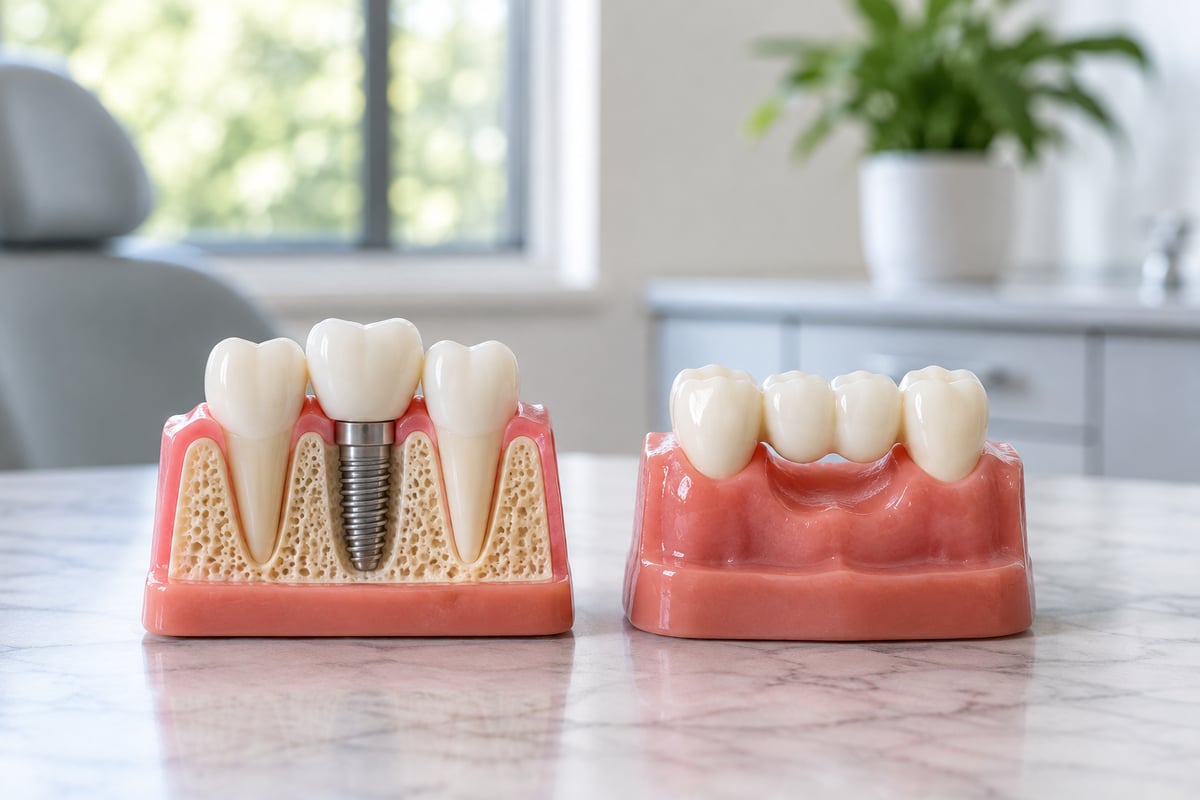
A dental implant is designed to replace both the visible portion of a missing tooth and its root.
The procedure involves placing a small titanium post into the jawbone. Over time, the bone integrates with the implant through a natural process called osseointegration, creating a stable foundation for a custom-made crown.
Because implants function similarly to natural tooth roots, they provide exceptional stability without relying on neighboring teeth for support.
What Is a Dental Bridge?
A traditional dental bridge replaces a missing tooth by attaching an artificial tooth to crowns placed over the neighboring natural teeth.
To accommodate these crowns, the supporting teeth typically need to be reshaped, even if they're otherwise healthy.
Bridges are fixed in place and can restore the appearance and function of your smile. However, unlike implants, they do not replace the missing tooth's root or provide the same stimulation to the underlying jawbone.
Dental Implants vs. Bridges: How Do They Compare?
|
Feature |
Dental Implants |
Traditional Dental Bridges |
|
Initial cost |
Generally higher |
Generally lower |
|
Longevity |
Can last decades with proper care |
May require replacement over time |
|
Jawbone preservation |
Helps maintain bone |
Does not directly stimulate bone beneath the missing tooth |
|
Neighboring teeth |
Usually remain untouched |
Often require reshaping |
|
Cleaning |
Similar to natural teeth |
Requires cleaning beneath the bridge |
|
Treatment time |
Several months in many cases |
Often a few weeks |
|
Surgery required |
Yes |
Usually no |
Both options have advantages, but understanding their long-term differences can help patients make a more informed decision.
Long-Term Costs: Why the Cheapest Option Isn't Always the Best Value
One of the biggest considerations when choosing between implants and bridges is cost.
Dental bridges generally have a lower upfront price because they don't require surgical implant placement. For patients looking for a faster, less expensive initial treatment, this can make bridges appealing.
However, the initial price doesn't always reflect the total cost of maintaining a restoration over time.
A traditional bridge may eventually need to be repaired or replaced because of wear, decay around supporting teeth, or changes in the surrounding oral structures. If one of the supporting teeth develops a problem, the entire bridge may need attention.
Dental implants typically require a larger initial investment, including surgical placement, the implant components, and the final restoration. Some patients may also require bone grafting.
However, the implant itself can remain functional for decades with proper care, although the crown may eventually need replacement.
The important distinction is that implants may reduce the need for repeated replacement procedures, potentially making them a better long-term value for suitable patients. Actual lifetime costs depend on treatment complexity, maintenance, complications, and insurance coverage.
Rather than comparing only today's prices, patients should consider what their tooth replacement may cost over the next 10, 20, or even 30 years.
The Longevity Advantage: What Does the Research Say?
Dental implants have an impressive history of long-term performance.
A 2026 systematic review and meta-analysis published in Periodontology 2000 examined 34 studies involving 7,522 patients and more than 20,000 dental implants. The review found that roughly 95% of implants remained in place over long-term follow-up. Implant survival does not necessarily mean freedom from complications, and individual outcomes vary.
This level of durability helps explain why dental implants have become such a trusted tooth replacement option.
While dental bridges can also provide many years of reliable service, their longevity depends partly on the health of the neighboring teeth supporting them.
For patients seeking a lasting solution, dental implants offer a compelling advantage.
Health Benefits: Why Dental Implants Go Beyond Appearance
Although restoring your smile is important, the health benefits of dental implants extend well beyond aesthetics.
1. Helping Prevent Jawbone Loss:
When a natural tooth is lost, the jawbone no longer receives the same stimulation from chewing forces transmitted through the tooth root.
Over time, this can contribute to bone deterioration.
Dental implants transfer chewing forces into the jawbone, helping preserve bone around the implant. Traditional bridges replace the visible tooth but do not provide this same direct stimulation.
The U.S. Food and Drug Administration recognizes helping prevent jawbone shrinkage as one of the important benefits of dental implants.
2. Protecting Healthy Neighboring Teeth:
One of the biggest advantages of dental implants is that they typically don't require altering the surrounding natural teeth.
Traditional bridges often require dentists to remove some enamel from neighboring teeth to accommodate supporting crowns.
For patients whose adjacent teeth are healthy, preserving their natural structure can be an important consideration.
3. Restoring Comfortable Chewing:
Missing teeth can make it difficult to enjoy certain foods, particularly those requiring stronger chewing forces.
Because dental implants are anchored directly into the jawbone, they provide a stable foundation for replacement teeth.
This can help patients regain confidence when eating, speaking, and smiling.
4. Supporting Long-Term Oral Health:
Dental implants are designed to function independently of neighboring teeth.
They can be brushed and cleaned much like natural teeth, although proper flossing, professional maintenance, and regular dental examinations remain essential.
Bridges require special attention beneath the artificial tooth, where food particles and plaque can accumulate.
Both restorations require good oral hygiene, but implants offer the benefit of replacing a missing tooth without connecting multiple teeth into one restoration.
Are Dental Implants Always the Better Choice?
Although dental implants are considered the gold standard for many patients, they aren't necessarily the best solution for everyone.
Successful implant treatment requires adequate jawbone support, healthy surrounding tissues, and consideration of a patient's overall health.
Certain medical conditions, uncontrolled gum disease, smoking, or insufficient bone density can increase the risk of complications.
Patients with inadequate jawbone volume may benefit from bone grafting before implant placement.
Dental bridges may be preferable when neighboring teeth already require crowns, when surgery isn't recommended, or when a patient prefers a shorter treatment timeline.
The best treatment is ultimately the one that supports your individual health, needs, and long-term goals.
Why Choosing an Experienced Oral Surgeon Matters
Dental implant placement is a surgical procedure that requires careful planning and precise positioning.
At Northwest Oral & Maxillofacial Surgery, our board-certified oral surgeons specialize in advanced oral surgical procedures, including dental implant placement and bone grafting.
Our team works closely with referring dentists to develop coordinated treatment plans that address both the surgical and restorative aspects of replacing missing teeth.
From evaluating your jawbone and oral health to discussing anesthesia options and recovery expectations, our goal is to help you feel informed and comfortable throughout the process.
Invest in Your Smile's Future with Northwest Oral & Maxillofacial Surgery
When comparing dental implants and bridges, it's important to think beyond the immediate cost.
While bridges offer an effective tooth replacement option, dental implants provide distinct advantages in durability, jawbone preservation, and protection of neighboring healthy teeth.
For many patients, these benefits make dental implants a worthwhile investment in their long-term oral health and quality of life.
Ready to explore whether dental implants are right for you?
At Northwest Oral & Maxillofacial Surgery, our experienced team is here to help you understand your options and make a confident decision about your smile.
Whether you're missing one tooth or several, we'll work with you and your dentist to develop a personalized treatment plan.
Contact Northwest Oral & Maxillofacial Surgery today to schedule a dental implant consultation and take the first step toward a healthier, more confident smile.