
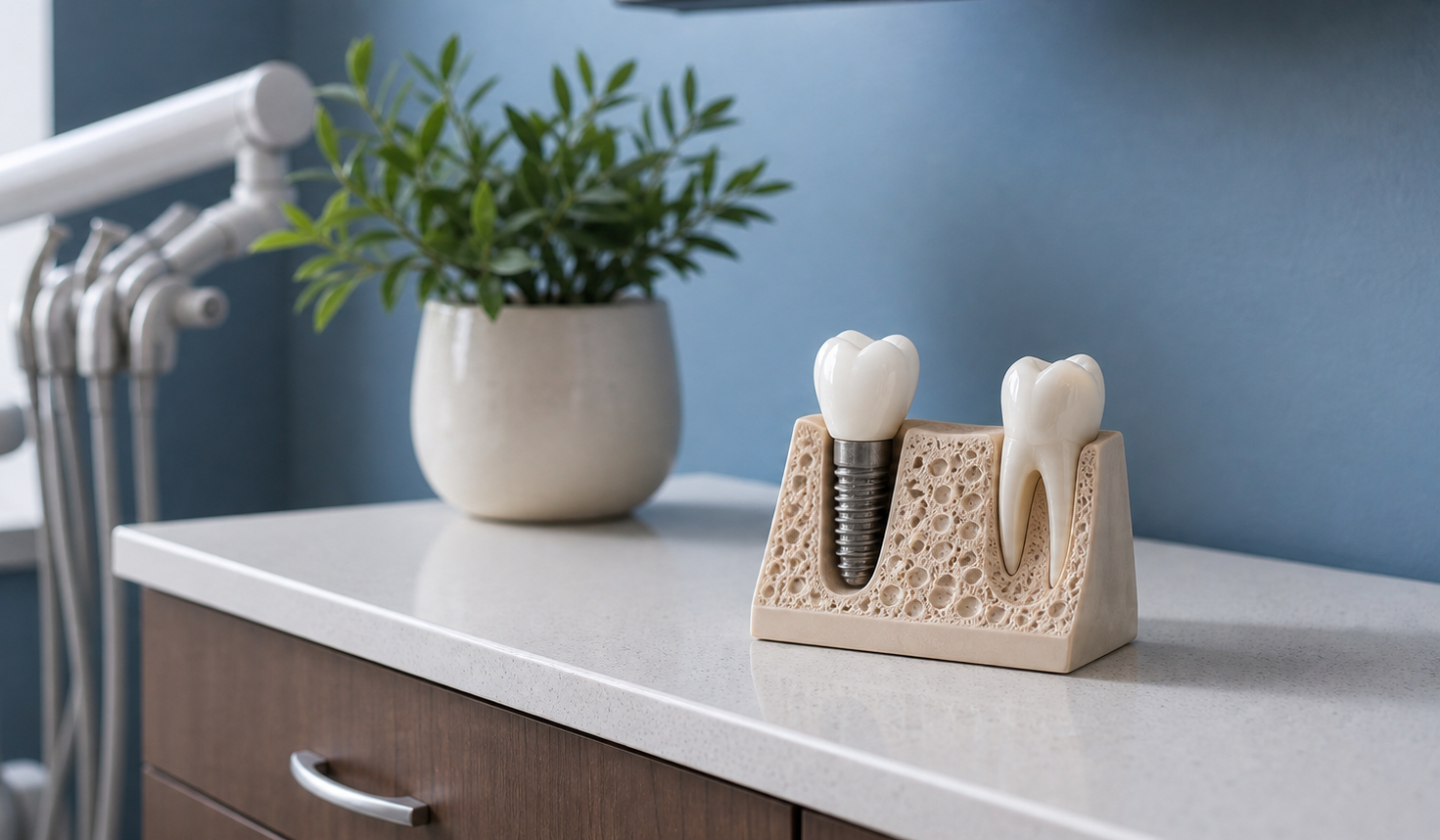
If you are considering a dental implant, you may already know that implants are designed to replace missing teeth with a strong, long-lasting solution. But what happens if there is not enough bone to support an implant?
For some patients, the answer may involve bone grafting or, when replacing upper back teeth, a sinus lift.
Hearing that you may need an additional procedure before receiving a dental implant can naturally lead to questions. Why is a bone graft necessary? How do you know if you need one? What exactly is a sinus lift? And does needing a graft mean you are not a good candidate for dental implants?
Understanding why these procedures are recommended can make the dental implant process feel much more straightforward.
Why Does Bone Matter for a Dental Implant?
Think about what gives a dental implant its stability. Unlike a removable tooth replacement, a dental implant is surgically placed into the jawbone, where it serves as an artificial tooth root.
That means the jawbone needs to have enough height, width, and density to support the implant.
After placement, the implant and surrounding bone gradually integrate through a process called osseointegration. This connection is an important part of creating a stable foundation for the replacement tooth.
But not every patient has enough bone in the area where an implant needs to be placed. When bone volume is insufficient, additional treatment may be recommended before or at the time of implant placement.
Why Would I Have Lost Bone in My Jaw?
One of the most common reasons is simply that a tooth has been missing for some time.
Your natural tooth roots help stimulate the surrounding jawbone. After a tooth is removed or lost, that stimulation disappears. Over time, the bone in that area can begin to shrink or resorb.
How much bone changes varies from patient to patient.
Other factors can contribute to bone loss as well, including periodontal (gum) disease, infection, trauma, or certain anatomical conditions. In some cases, a patient may naturally have less bone available in a particular area.
This is one reason why two people missing the same tooth may have very different dental implant treatment plans.
So, Does Everyone Need a Bone Graft Before Getting an Implant?
No. Many patients have enough healthy bone to receive a dental implant without bone grafting.
The question is not simply, “How long has my tooth been missing?” Instead, your oral surgeon needs to determine whether there is enough bone in the specific location where the implant will be placed.
During your evaluation, imaging can provide a detailed look at the jaw and surrounding anatomy. Your oral surgeon can evaluate the amount and quality of available bone and determine whether it can support an implant.
If there is not enough bone, grafting may help create a more suitable foundation.
What Exactly Is a Dental Bone Graft?
A bone graft is a procedure used to add or rebuild bone in an area where additional volume is needed.
Grafting material is placed in the treatment area, creating a framework that supports new bone formation as the site heals. The type of graft and technique used can vary depending on how much bone is needed, where the implant will be placed, and the patient's individual anatomy.
The goal is straightforward: create adequate bone support for the planned dental implant.
For some patients, a relatively small graft may be all that is necessary. Others may require more extensive bone augmentation before implant placement.
Can the Bone Graft and Dental Implant Be Done at the Same Time?
Sometimes.
If only a small amount of additional bone is needed and the implant can still achieve adequate stability, your oral surgeon may be able to perform grafting at the same appointment as implant placement.
In other situations, the bone graft needs time to heal and mature before the implant can be placed. Healing times vary depending on the procedure, the grafted area, and the individual patient.
Although this can add another stage to the process, allowing the graft to heal appropriately can help establish the foundation needed for successful implant treatment.
What Is a Sinus Lift, and Why Would I Need One?
If you are replacing a missing tooth toward the back of your upper jaw, you may hear your oral surgeon mention a sinus lift.
Why does your sinus have anything to do with a dental implant?
The maxillary sinuses are air-filled spaces located above the upper back teeth. In some patients, there may not be enough bone between the mouth and the sinus to securely accommodate an implant. Bone loss following tooth loss can further reduce the amount of available bone in this area.
A sinus lift, also called sinus augmentation, is a type of bone grafting procedure designed to increase the amount of bone available in the upper posterior jaw.
During the procedure, the sinus membrane is carefully elevated, and grafting material is placed beneath it. As the area heals, this can create additional bone height for future implant placement.
Does Needing a Sinus Lift Mean Something Is Wrong With My Sinuses?
Not necessarily.
A sinus lift is often recommended because of normal anatomy and the amount of bone available for an implant, not because there is something wrong with the sinus itself.
Everyone's anatomy is different. Some people naturally have larger sinus spaces or thinner bone in the upper jaw. Bone changes following tooth loss can also affect the available space.
Your oral surgeon will evaluate your anatomy and determine whether sinus augmentation is necessary for safe, predictable implant placement.
Does Needing a Bone Graft Mean I Am Not a Good Candidate for Dental Implants?
This is an important distinction: not having enough bone right now does not automatically mean you cannot receive a dental implant.
Bone grafting techniques can make implant treatment possible for many patients who otherwise would not have sufficient bone support.
Your candidacy depends on more than bone volume alone. Your oral surgeon will consider your overall health, oral health, anatomy, treatment location, healing ability, and other factors when developing a personalized treatment plan.
Instead of asking, “Do I have enough bone?” a more useful question may be, “What would need to be done to create the right foundation for my implant?”
How Will I Know If I Need Bone Grafting?
You usually cannot determine this just by looking at the area or feeling your jaw.
A clinical examination and appropriate imaging allow your oral surgeon to evaluate what is happening beneath the gums. This helps determine the dimensions of the available bone, the position of nearby structures, and the best location for implant placement.
That evaluation also helps answer some of the questions that matter most to patients: Can the implant be placed now? Is grafting necessary? Would the graft and implant be completed together or separately? How will that affect the overall treatment timeline?
There is no single answer that applies to every patient, which is why individualized planning is such an important part of dental implant care.
Building the Right Foundation for Your Dental Implant
Learning that you may need a bone graft or sinus lift can make dental implant treatment sound more complicated than you expected. But these procedures serve an important purpose: helping create the bone support needed for a stable, well-planned implant.
You may not need grafting at all. You may need a small amount of additional bone at the time of implant placement. Or your treatment may require a separate grafting or sinus augmentation procedure before moving forward.
The best way to know is to have your jaw, bone, and individual anatomy evaluated by an experienced oral and maxillofacial surgeon.
If you are considering dental implants or have been told that you may need bone grafting, schedule a consultation with Northwest Oral & Maxillofacial Surgery. Our team can evaluate your needs, explain your treatment options, and develop a personalized plan designed to create a strong foundation for your dental implant and long-term oral health.




.png?width=720&height=480&name=Untitled%20design%20(51).png)